Arrays
Continuous block of allocated space or memory in RAM.
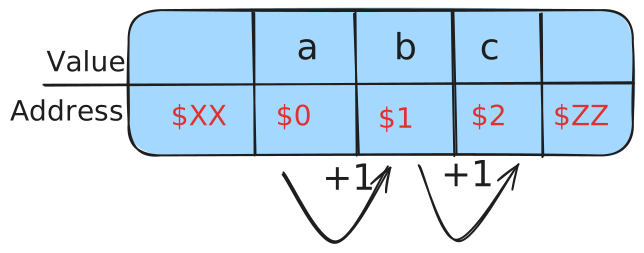
Arrays can be:
- Static - Fixed Size Memory
- Dynamic - Fixed Size Allocated but can be reallocated to a bigger fixed size.
Static Arrays
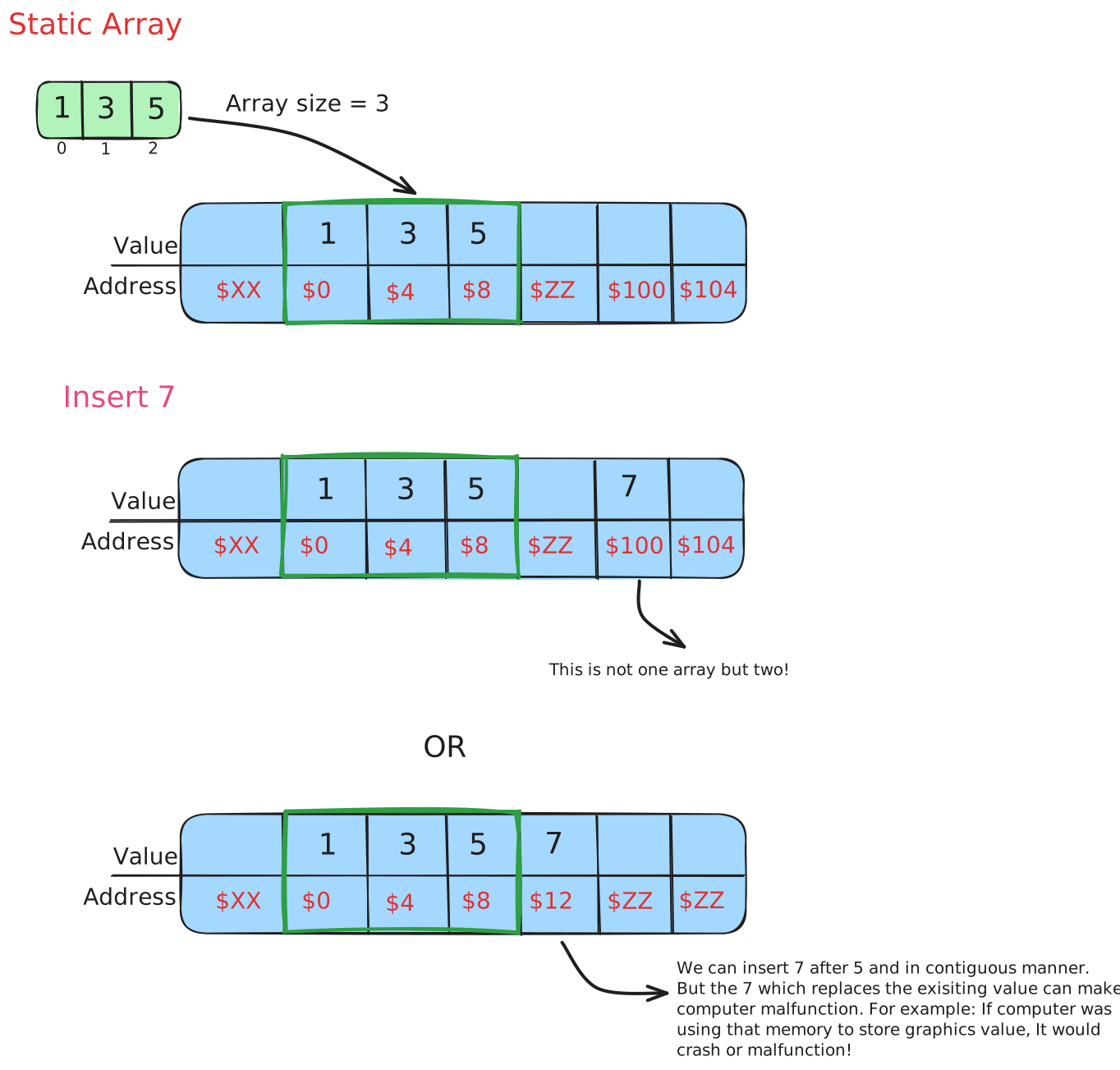
- They are fixed size arrays. Once allocated they cannot hold more values than original size.
- Therefore, Static Arrays cannot:
- Increase Size
- Store anywhere else
- Properties of Static Arrays:
- Read
- Read at Index - O(1)
- Write (Insert)
- Insert at Start - O(n)
- Insert at End - O(1)
- Insert anywhere Middle - O(n)
- Insert Anywhere - O(n)
- Write (Remove)
- Remove at Start - O(n)
- Remove at End - O(1)
- Remove anywhere Middle - O(n)
- Remove from anywhere - O(n)
- Read
Programming Languages and Arrays
Some languages like Python, JavaScript uses only dynamic arrays, while some languages like C, C++ provides Static and dynamic array.
Operations
Read
Reading an element in the array is O(1) time complexity. Because of RAM, which literally means Random Access Memory, we can read at any location of the array given we have its index.
Write (Insert)
Writing an element in the array as worst case can be O(n), while in the best case, it can be O(1).
- Inserting or Removing at end is O(1).
- Inserting or Removing at start is O(n)
- Inserting or Removing anywhere in middle is O(n).
Code Implementation
Python
Implementing Static Array in Python is a joke. You can force yourself, but I would suggest to use C to implement this.
C
Rust