What is Machine Learning
Machine Learning is the field of study that gives computers the ability to learn without being explicitly programmed. - Arthur Samuel (1959)
Solution to Exercise 2.1
b. Would have made it worse
In general, the more opportunities you give a learning algorithm to learn, the better it will perform.
In general, the more opportunities you give a learning algorithm to learn, the better it will perform.
Types of Machine Learning
There are many types of Machine Learning:
Supervised Learning (most used)
Unsupervised Learning
Recommender System
Reinforcement Learning
Supervised “Machine” Learning
Supervised Learning refers to algorithms that learn
x (input)toy (output)mappings.The key characteristic of supervised learning is that you give your learning algorithm examples to learn from.That includes the right answers, whereby right answer, I mean, the correct label y for a given input x, and is by seeing correct pairs of input x and desired output label y that the learning algorithm eventually learns to take just the input alone without the output label and gives a reasonably accurate prediction or guess of the output.
Applications of Supervised Learning
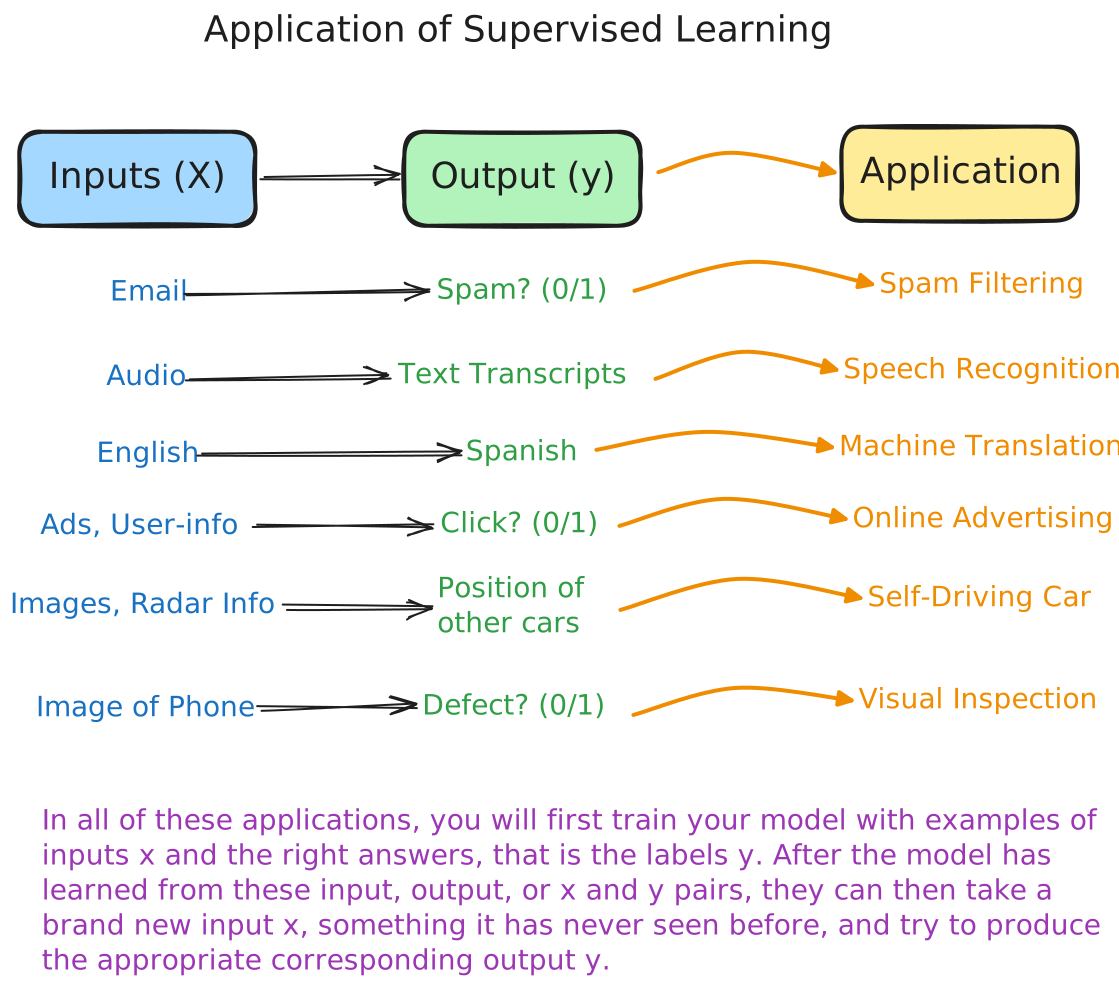
Figure 2.1:Applications of Machine Learning
To reiterate: In all of these applications, you will first train your model with examples of inputs x and the right answers, that is the labels y. After the model has learned from these input, output, or x and y pairs, they can then take a brand new input x, something it has never seen before, and try to produce the appropriate corresponding output y.
There are two types of Supervised Learning Problems:
Regression
Classification
Regression
Regression model predicts numbers.
Infinite many possible numbers.
Example:
Predicting a Housing Price from size of the house
Predicting marks based on factors like sleeping hours, studying hours, watching cartoons, etc.
For Example: Housing Price Prediction
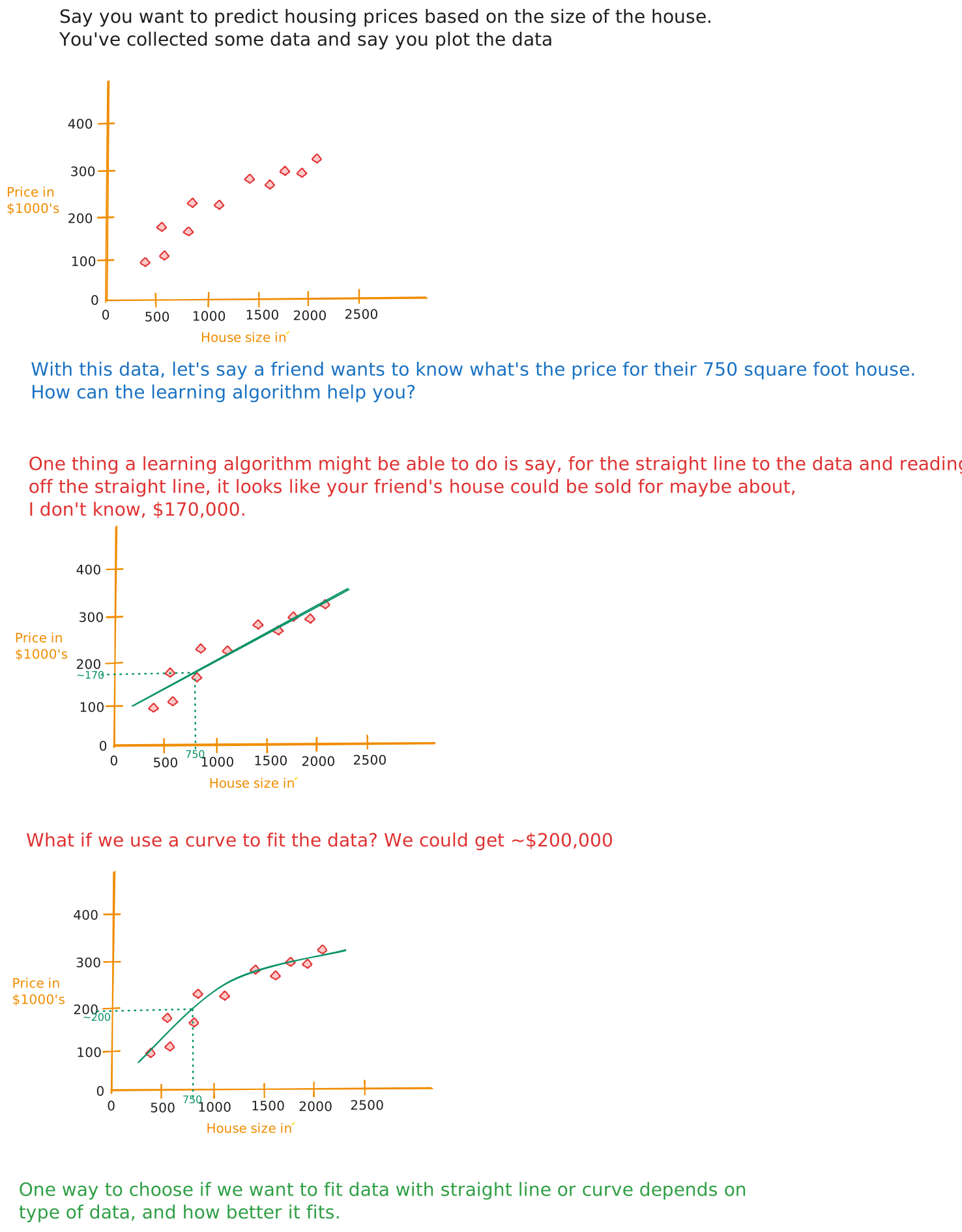
Figure 2.2:Example of Regression Model
What you’ve seen is the example of supervised learning. Because we gave the algorithm a dataset in which the so-called right answer, that is the label or the correct price y is given for every house on the plot. The task of the learning algorithm is to produce more of these right answers, specifically predicting what is the likely price for other houses like your friend’s house. That’s why this is supervised learning. To define a little bit more terminology, this housing price prediction is the particular type of supervised learning called regression.
Regression means we’re trying to predict a number from infinitely many possible numbers (such as house price).
Classification
Classification model predicts categories.
Small number of possible outcomes.
Example:
Predicting cats vs dogs
recognizing of any of 10 possible medical conditions in a patient
For Example: Breast Cancer Detection
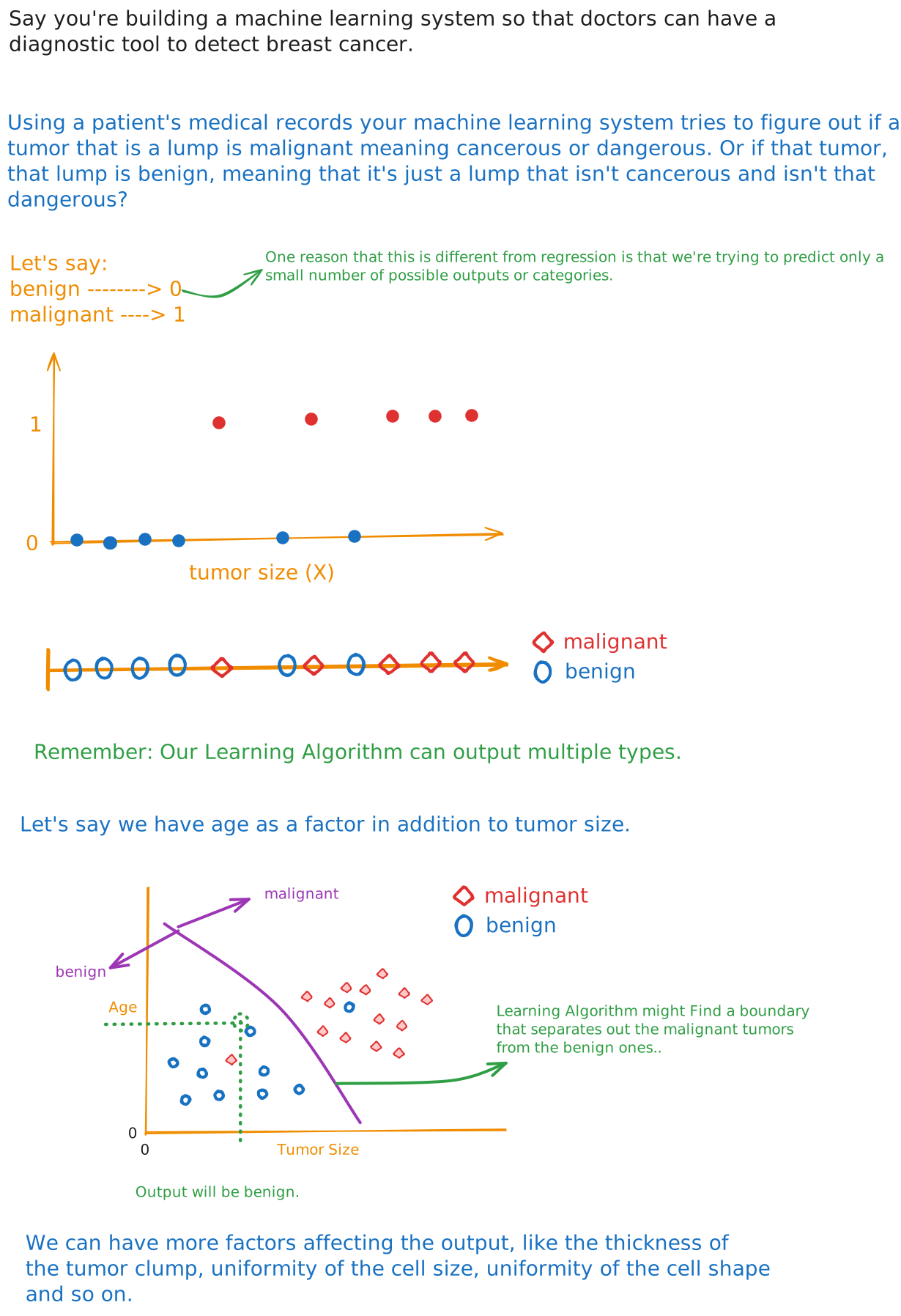
Figure 2.3:Example of Classification Model
Classification algorithms predict categories. Categories don’t have to be numbers.
It can predict if picture is dog or cat?
It can also predict if a tumor is benign or malignant?
Categories can be numbers like 0, 1 or 1, 2, 3, ...
But what makes classification different from regression is that classification predicts a small finite limited set of possible output categories such as 0, 1 and 2 but not all possible numbers in between like 0.5 or 1.7 (which regression can find).
In classification, the terms output classes and output categories are often used interchangeably.
Summarize
Supervised learning maps input x to output y, where the learning algorithm learns from the quote right answers.
Two major types of supervised learning are
Regression - Algorithm has to predict numbers from infinitely many possible output numbers
Classification - Algorithm has to make a prediction of a category (small set of possible outputs)
Solution to Exercise 2.2
b. Spam filtering.
Explanation: For instance, emails labeled as “spam” or “not spam” are examples used for training a supervised learning algorithm. The trained algorithm will then be able to predict with some degree of accuracy whether an unseen email is spam or not.
Unsupervised Learning
In Unsupervised Learning the data only comes with inputs
X, but not output labelsy. The algorithm has to find some structure or some pattern or something interesting in the data.
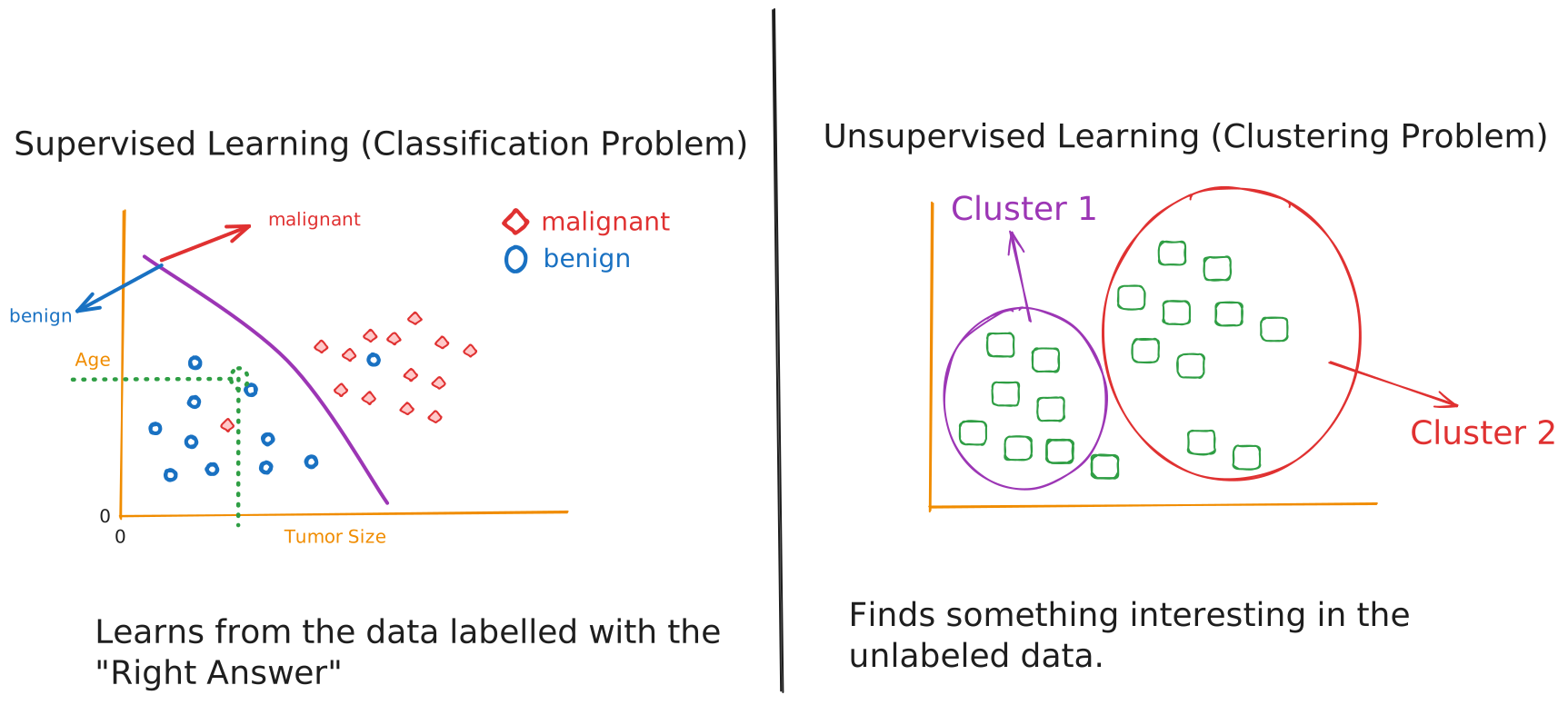
Figure 2.4:Supervised Learning vs Unsupervised Learning
In Unsupervised Learning, We are given data that isn’t associated with any output labels y, say you’re given data on patients and their tumor size and the patient’s age. But not whether the tumor was benign or malignant. We’re not asked to diagnose whether the tumor is benign or malignant, because we’re not given any labels. Why in the dataset, instead, our job is to find some structure or some pattern or just find something interesting in the data. This is Unsupervised Learning.
we call it unsupervised because we’re not trying to supervise the algorithm.
There are types of Unsupervised Learning Problems
Clustering Problem
Anomaly Detection - Used to detect unusual events.
Dimensionality Reduction
Solution to Exercise 2.3
a. Given a set of news articles found on the web, group them into sets of articles about the same stories.
c. Given a database of customer data, automatically discover market segments and group customers into different market segments.
Clustering Problem
Unsupervised Clustering Learning groups similar data points together.
Clustering algorithm places the unlabeled data, into different clusters or groups.
Clustering is used in
Google News: Google news does is every day it goes. It looks at hundreds of thousands of news articles on the internet, and groups related stories together.
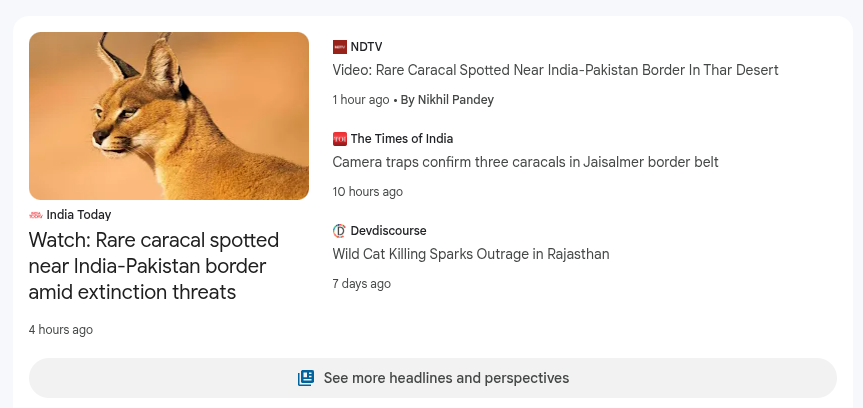
Clustering algorithm figures out on his own which words suggest, that certain articles are in the same group.
Clustering Genetics or DNA data
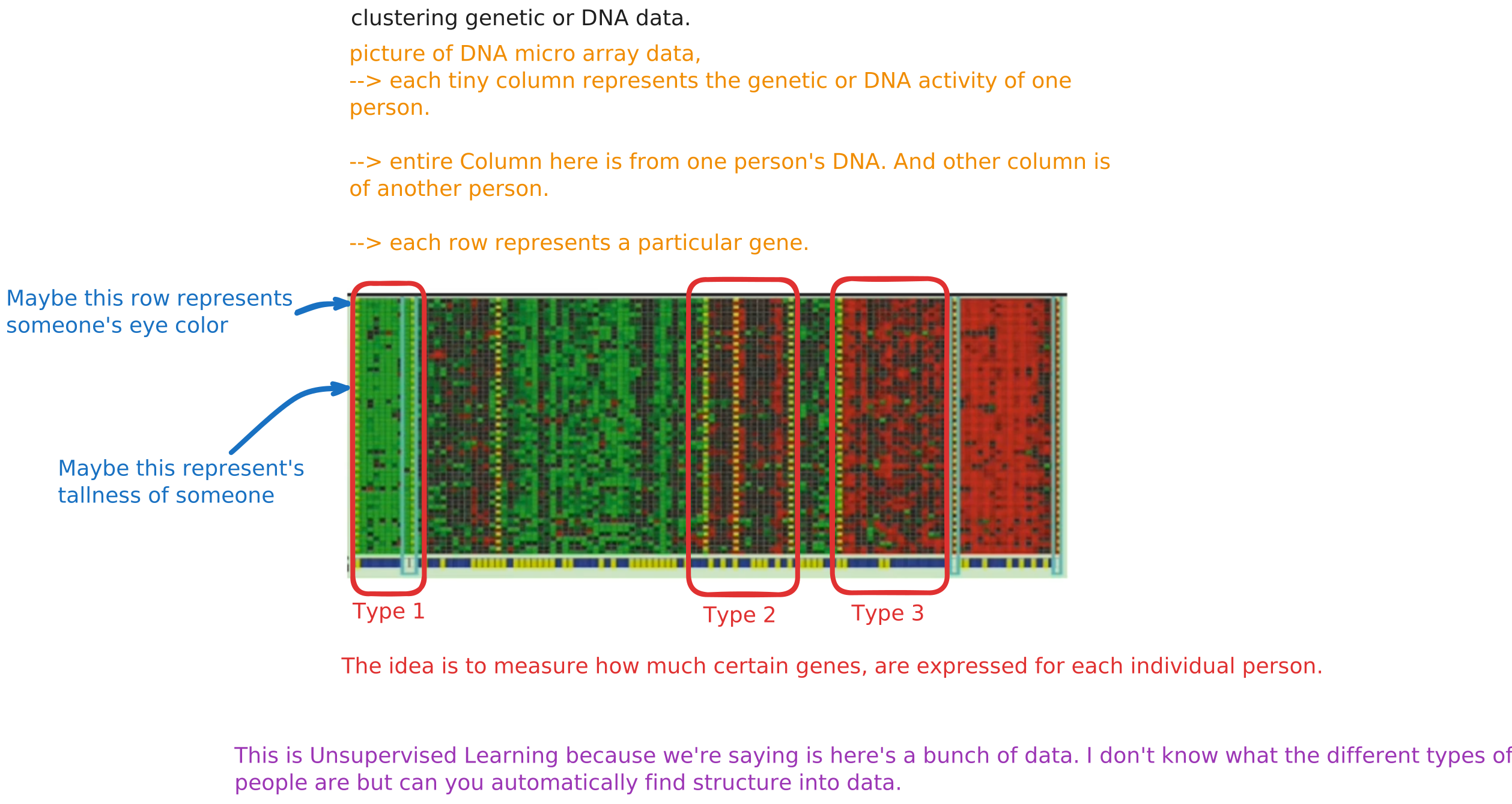
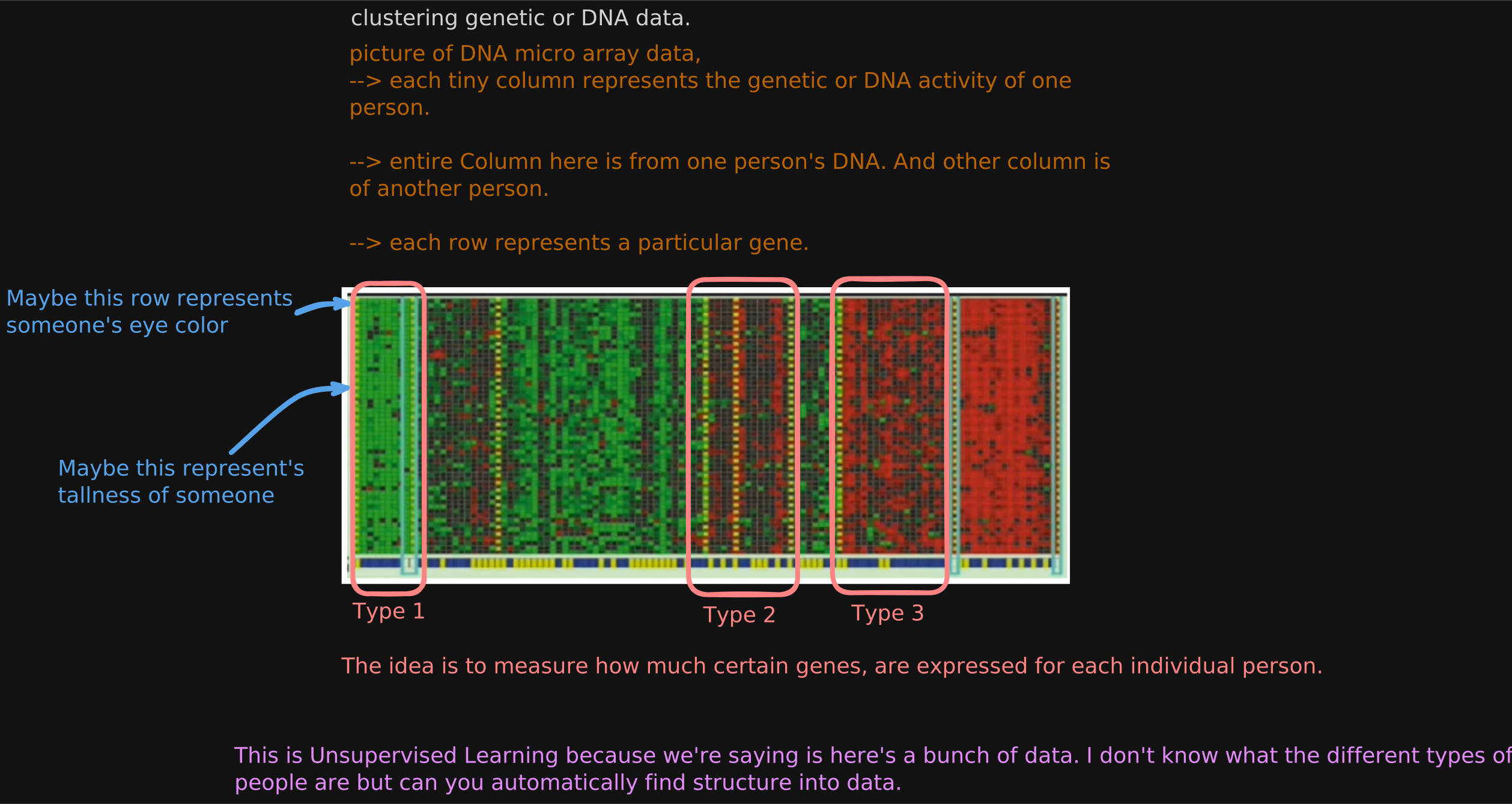
Figure 2.5:Example of Clustering in Unsupervised Learning
A clustering algorithm, which is a type of unsupervised learning algorithm, takes data without labels and tries to automatically group them into clusters.
Anomaly Detection
Anomaly Detection is used to detect unusual events.
Unsupervised Anomaly Detection finds unusual data points.
This turns out to be really important for fraud detection in the financial system, where unusual events, unusual transactions could be signs of fraud and for many other applications.
Dimensionality Reduction
Dimensionality Reduction takes big dataset and compress it to a much smaller dataset while losing as little information as possible.